0 ratings

Item #:
40023579
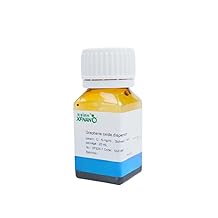
Research Grade 1-6Layers Aqueous Graphene Oxide Dispersion-Same Day Priority Shipping
Item #:
40023579
ZMW 4090
Price Details
Excluding Shipping & Custom charges ( Shipping and custom charges will be calculated on checkout )
*All items will import from US
0 ratings
Write a review
In stock
 Imported from USA store
QTY:
Order now and get it around Thursday, July 09
Secured transaction
Ubuy works hard to protect your security and privacy. Our advanced payment security system ensures confidentiality by encrypting your information during transmission using AES (Advanced Encryption Standards) and SSL (Secure Socket Layer) protocols. Your payment details are 100% secure as we do not share your payment details with third party sellers.
Our Top Logistics Partners


Research-grade Graphene Oxide Dispersion with 1-6 layers for various applications

Fast
Shipping

Free
Return*

Secure Packaging

100% Original Products

PCI DSS Compliance

ISO 27001 Certified


Note: Step Down Voltage Transformer required for using electronics products of US store (110-120). Recommended power converters Buy Now.


What Stands Out
High Purity
This dispersion boasts high-purity graphene oxide, ensuring superior conductivity and performance for research applications, setting it apart from lower-grade competitors.
Aqueous Solution
The water-based formulation offers enhanced ease of use and safety for lab environments, eliminating the need for hazardous organic solvents commonly found in alternatives.
Fast Shipping
With same-day priority shipping, this product provides researchers with immediate access to high-quality materials, ensuring minimal disruption to project timelines and increased efficiency.
Product Details
| Item Weight | 1 lbs (450 grams) |
Who Should Buy?

-
Researchers in Nanotechnology
Ideal for researchers conducting experiments that require high-quality graphene oxide for advanced nanotechnology applications.
-
Material Scientists
Perfect for material scientists needing a reliable aqueous dispersion of graphene oxide for developing new materials.
-
Educational Institutions
Beneficial for educational institutions looking to enhance their science programs with cutting-edge materials in graphene research.

-
Casual Hobbyists
Not ideal for casual users without experience, as handling and applying graphene oxide requires specialized knowledge.
-
Small-Scale Makers
Unsuitable for small-scale makers or tinkerers seeking basic supplies, as this product targets advanced applications.
-
Budget-Conscious Buyers
May not suit budget-conscious buyers, as research-grade materials often come at a premium price that may exceed limits.
Product Description
Research Grade 1-6Layers Aqueous Graphene Oxide Dispersion-Same Day Priority Shipping
Have any Query? Chat with us
Customer Questions & Answers
-
Question:
What are the primary applications of Research Grade Aqueous Graphene Oxide Dispersion?
Answer: Research Grade Aqueous Graphene Oxide Dispersion is widely utilized in various scientific and industrial applications. It is commonly used in nanotechnology, materials science, and electronics due to its exceptional conductivity and electrical properties. For example, this dispersion can improve the strength and flexibility of polymers, enabling the development of advanced composites. In the field of biomedical engineering, it is also explored for drug delivery and biosensing applications, thanks to its biocompatibility. -
Question:
How should I store Research Grade Aqueous Graphene Oxide Dispersion?
Answer: To ensure the integrity of Research Grade Aqueous Graphene Oxide Dispersion, it should be stored in a cool, dark place, ideally at a temperature between 2-8 degrees Celsius. This prevents degradation of the material over time. Additionally, keeping the container tightly sealed minimizes exposure to moisture and air, which can negatively affect its properties. For laboratory settings, it is recommended to label the containers with the date of opening and to monitor storage conditions routinely. -
Question:
What is the significance of the layer count (1-6 layers) in Graphene Oxide Dispersion?
Answer: The layer count in Graphene Oxide Dispersion is crucial as it dictates the material's properties and applications. Single-layer graphene exhibits superior electrical conductivity and mechanical strength owed to its unique atomic structure. In contrast, multilayer graphene can display different electrical and thermal properties, making it suitable for various applications. When selecting a layer count, consider how these attributes will affect your specific use cases, whether in manufacturing electronic components or developing innovative materials. -
Question:
Is Research Grade Aqueous Graphene Oxide Dispersion safe to handle?
Answer: While Research Grade Aqueous Graphene Oxide Dispersion is primarily considered safe for research use, handling should always be done with care. It is important to use appropriate personal protective equipment (PPE), such as gloves and safety goggles, to minimize any risk during use. Ensuring good laboratory practices will help in managing any potential hazards. Additionally, it’s essential to refer to the material safety data sheet (MSDS) for specific handling and safety guidelines relevant to your context. -
Question:
What is the difference between aqueous graphene oxide and other forms?
Answer: Aqueous graphene oxide is a form where graphene oxide is suspended in water, providing a convenient medium for various applications, especially where water solubility is crucial. In contrast, other forms of graphene oxide may not be soluble in water, which limits integration in certain applications. Aqueous dispersion is preferred in scenarios such as coating technologies or when formulating products requiring a liquid phase, making it ideal for creating composite materials in a more versatile manner. -
Question:
How is the quality of Research Grade Aqueous Graphene Oxide Dispersion determined?
Answer: The quality of Research Grade Aqueous Graphene Oxide Dispersion is assessed through parameters such as purity, concentration, and consistency in layer count. Manufacturers often employ advanced characterization techniques like Raman spectroscopy or scanning electron microscopy (SEM) to verify these factors. In research contexts, high-quality dispersion is critical as it significantly influences the reproducibility and reliability of experimental results. Thus, sourcing from reputable suppliers is essential for obtaining high-grade materials. -
Question:
Can I mix Research Grade Aqueous Graphene Oxide Dispersion with other materials?
Answer: Yes, Research Grade Aqueous Graphene Oxide Dispersion can often be mixed with various solvents and polymers depending on the intended application. The ability to integrate it into different matrices can enhance the electrical and mechanical properties of composites. For instance, combining it with plastics can create stronger and lighter materials for automotive or aerospace applications. However, compatibility should be tested to ensure that the dispersive properties are maintained and application outcomes are optimized. -
Question:
What considerations should I have in mind when using this dispersion in experiments?
Answer: When using Research Grade Aqueous Graphene Oxide Dispersion in experiments, consider factors such as compatibility with other materials, potential reactivity, and the specific experimental conditions. It’s crucial to ensure that your choice of dispersion aligns with your research goals, whether you are aiming for optimal conductivity or mechanical enhancement. Adequate mixing techniques and concentrations should also be assessed to achieve the desired results while avoiding sedimentation or phase separation. -
Question:
What testing methods are suitable for analyzing samples with this dispersion?
Answer: Samples using Research Grade Aqueous Graphene Oxide Dispersion can be analyzed through various testing methods like UV-Vis spectroscopy, cyclic voltammetry, and transmission electron microscopy (TEM). Each of these approaches provides insights into the dispersion quality, electronic properties, and morphological characteristics of the samples. Employing a combination of these methods usually yields a comprehensive understanding of how the dispersion performs in your specific application area, assisting in further research and development. -
Question:
Where can I buy Research Grade 1-6Layers Aqueous Graphene Oxide Dispersion in Zambia?
Answer: You can buy Research Grade 1-6Layers Aqueous Graphene Oxide Dispersion at Ubuy. They offer a variety of products including this dispersion and ensure that you can easily find what you need for your research or industrial applications. Ubuy provides convenient options to explore different brands and specifications, catering to both bulk and individual needs. Visit their website to view the available options in your region.
XFNANO Analytical Reagents Editorial Review
No editorial reviews found
Customer Reviews & Ratings
1 customers ratings
-
5 Star
100%
-
4 Star
0%
-
3 Star
0%
-
2 Star
0%
-
1 Star
0%
Review this product
Share your thoughts with other customers
Pros
- High purity level
- Excellent dispersion stability
- Versatile applications
- Fast shipping
- Cost-effective solution
Cons
- Limited shelf life
Product Price History
Important information
- Limitations : For products shipped internationally, please note that any manufacturer warranty may not be valid; manufacturer service options may not be available; product manuals, instructions, and safety warnings may not be in destination country languages; the products (and accompanying materials) may not be designed in accordance with destination country standards, specifications, and labeling requirements; and the products may not conform to destination country voltage and other electrical standards (requiring use of an adapter or converter if appropriate). The recipient is responsible for assuring that the product can be lawfully imported to the destination country. When ordering from Ubuy or its affiliates, the recipient is the importer of record and must comply with all laws and regulations of the destination country.
- Not all the products listed on Ubuy are for sale, as Ubuy is a global search engine. Products are subject to export/trade regulations.
ZMW 4090
Order now and get it around Thursday, July 09
This item is not restrict in my country.(Please click on above link if this item is not restrict in your country, So our team will review and allow.)
QTY:
Secured transaction
Ubuy works hard to protect your security and privacy. Our advanced payment security system ensures confidentiality by encrypting your information during transmission using AES (Advanced Encryption Standards) and SSL (Secure Socket Layer) protocols. Your payment details are 100% secure as we do not share your payment details with third party sellers.
Our Top Logistics Partners
Fastest cross-border delivery
Features & Benefits
- Brown liquid with diameter ranging from 0.5-5um and thickness ranging from 1-6 layers in water solvent
- Comes in concentrations of 5mg/ml and 10mg/ml
- Prepared using the Hummers-Sonication method
- Suitable for adsorption, separation, catalysis, solid phase extraction, detection and sensors